Archive News

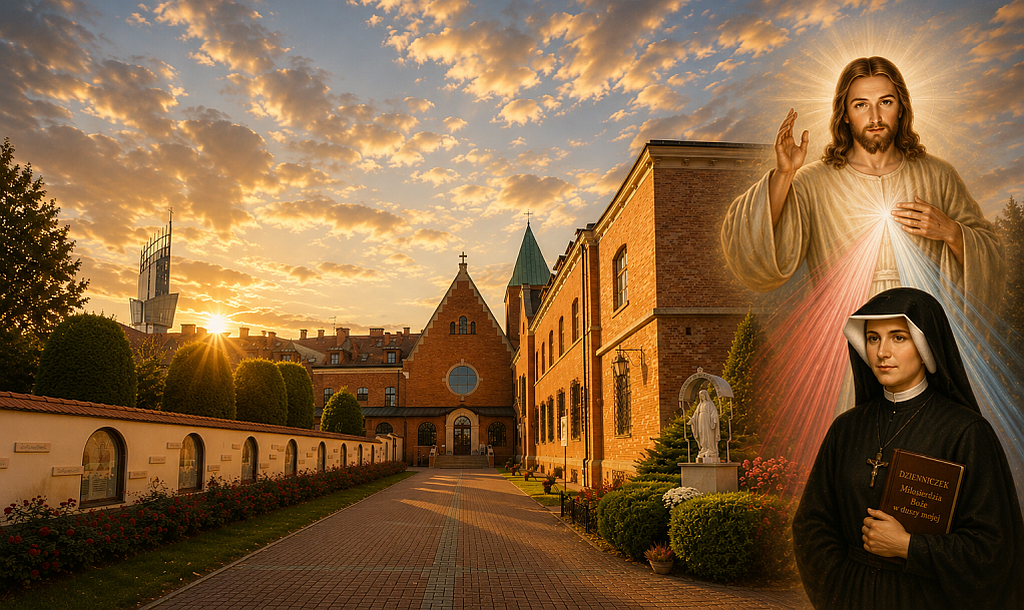
On the octave of the Resurrection, the greatest feast of the Catholic Church, ends on the Feast of Divine Mercy, widely called the Mercy Sunday. Jesus demanded the establishment of the feast when He revealed Himself to St. Faustina, repeatedly expressing His desire that the first Sunday after Easter be the Feast of Mercy: He said: I desire that the Feast of Mercy be a refuge and shelter for all souls, and especially for poor sinners. On that day the very depths of My tender mercy are open. I pour out a whole ocean of graces upon those souls who approach the fount of My mercy. The soul that will go to Confession and receive Holy Communion shall obtain complete forgiveness of sins and punishment. On that day all the divine floodgates through which grace flow are opened. Let no soul fear to draw near to Me, even though its sins be as scarlet. (Diary, 699). On this day, we can receive the grace of washing of regeneration (one of the graces of baptism), but also obtain many other graces and earthly blessings, if they are in accordance with the will of God. The condition is a pure heart without attachment to sin and the attitude of trust in God, which is the desire to do His will and active love of one’s neighbors. The only vessel for drawing the graces is trust, as Jesus taught St. Faustina, because God’s Mercy has no limits and the joy of God is to give much – very much. Such is the Merciful Love we can get to know better and venerate as we celebrate the holiday. Click here to learn more about the Feast and its history in the Church.

The Feast of Mercy, in accordance with the wishes of Jesus expressed to St. Faustina and the decisions of the Holy Father John Paul II, is celebrated on the first Sunday after Easter (this year it is April 12). The central ceremony held at the Shrine of Divine Mercy in Krakow-Łagiewniki. They will be preceded by a novena of the Chaplet of Divine Mercy made on Good Friday, and a night vigil which starts in the Basilica on Saturday at 9:00 pm. Sunday Masses at the Shrine of Divine Mercy will be the celebrated according to the following program:

12:00 am (midnight) – Holy Mass, Bp Janusz Mastalski (basilica).

6:00 am – Holy Mass Father Tomasz Szopa (basilica).

8:00 am – Holy Mass,  Bishop Damian Muskus (basilica).

10:00 am – Holy Mass, Cardinal Grzegorz Ryś, Archbishop of Krakow – field altar in front of the basilica – transmission in TVP1.

12:30 pm – Holy Mass, Father Roret Wożniak, Rector of the Major (basilica).

3:00 pm – Hour of Mercy and Chaplet of Divine Mercy, Father Zbigniew Bielas, Rector of the Shrine and the sisters of the Congregation of Our Lady of Mercy (basilica). Broadcast: TVP, TV Republika and several radio stations.

4:00 pm – Holy Mass, Cardinal Stanisław Dziwisz (basilica).

6:00 pm – Holy Mass, Bishop Robert Chrząszcz (basilica).

7:00 pm – Holy Mass, Father Grzegorz Zembroń, M.S. (chapel of the miracle-famous Divine Mercy Image and the tomb of St. Faustina).

Masses from the basilica, the Hour of Mercy prayer (3:00 pm), and the Chaplet of Divine Mercy will be broadcast by TV Milosierdzie at the website of our Rectory, www.milosierdzie.pl, whereas Holy Mass at 7:00 pm and visitation of the Divine Mercy Image and the tomb of St. Faustina by pilgrims will be live streamed at www.saint-faustina.en .

Masses from the basilica, the Hour of Mercy prayer (3:00 pm), and the Chaplet of Divine Mercy will be broadcast by TV Milosierdzie at the website of our Rectory, www.milosierdzie.pl, whereas Holy Mass at 7:00 pm and visitation of the Divine Mercy Image and the tomb of St. Faustina by pilgrims will be live streamed at www.saint-faustina.en .

On April 12 this year, at the Sanctuary of Divine Mercy at the Old Market Square, Holy Masses will be celebrated at: 8:00, 12:00, and 17:00. The solemn Eucharist at 12:00 will be presided over by Bishop Adam Bab, auxiliary bishop of the Lublin diocese, together with Bishop Szymon Stułkowski, ordinary of the Płock diocese, and Fr. Dariusz Kowalczyk, chairman of the “Work of the New Millennium” foundation. During the Mass, images of Divine Mercy brought by the faithful will be blessed, fulfilling the wish of Jesus, who asked St. Faustina that the image with the inscription “Jesus, I trust in You” be solemnly blessed and publicly venerated on the first Sunday after Easter. The musical setting of the Mass will be provided by the choir “Cantores Misericordiae” from the Płock Sanctuary. The museum will be open all day, featuring a reconstruction of St. Faustina’s cell and the bakery oven where she sometimes worked. A café and a souvenir shop will also be open. At 15:00, prayer at the Hour of Mercy and the Chaplet of Divine Mercy.

The celebration of Divine Mercy Sunday at the Church of Santo Spirito in Sassia, which is the Roman Shrine of Divine Mercy, will begin with the Eucharist on the vigil of the feast at 7:00 PM, presided over by Cardinal Dominique Mamberti, titular cardinal of this church. The schedule of services on the Feast of Divine Mercy is as follows:
7:30 – Holy Mass in Italian
8:30 – Holy Mass in English
10:00 – Holy Mass presided over by the rector, Fr. Paolo Martinelli
11:00 – Procession with the image of the Merciful Jesus to St. Peter’s Square and participation in the “Regina Coeli” with the Holy Father Leo XIV
12:30 – Holy Mass in Italian
3:00 PM – Solemn Hour of Mercy and adoration with the Chaplet of Divine Mercy
4:00 PM – Holy Mass in Polish
7:00 PM – Solemn Holy Mass presided over by His Eminence Cardinal Baldassare Reina, Vicar of Rome.

The church of the Polish Catholic Mission in Luxembourg, where Oblate Fathers serve, will receive the title of the Sanctuary of Divine Mercy on the upcoming Feast of Divine Mercy. The celebrations will be presided over by Cardinal Jean-Claude Hollerich, Archbishop of Luxembourg. In the main altar of this church, an image of the Merciful Jesus has been displayed for several years, and on both sides there are relics of St. John Paul II and St. Faustina, along with their bas-reliefs. Sister Sangwina Kostecka from the Congregation of the Sisters of Our Lady of Mercy, from the convent at the Sanctuary of Divine Mercy in Kraków-Łagiewniki, will take part in this celebration. The presence of the Oblates in Luxembourg dates back to 1948, when the Primate of Poland, Cardinal August Hlond, asked them to take on this mission.

Sister Norberta Ruchała and Sister Klara Domańska from the Kraków communities of the Congregation of the Sisters of Our Lady of Mercy will take part in the celebrations of the Feast of Divine Mercy at St. Mark’s Parish in Wolfsberg, Austria. The program includes solemn Holy Masses, the opportunity to receive the Sacrament of Reconciliation, conferences, times of prayer, and periods of adoration. There will also be space for personal meetings, conversations, and a shared meal. Among the invited guests are Dr. Johannes Hartl (Augsburg), Prof. Ralph Weimann (Rome), Sister Kerstin Oswald (Medjugorje), and Sister Norberta Ruchała (Kraków). The culmination of the Feast of Divine Mercy will be a solemn Eucharist with the participation of the Apostolic Nuncio to Austria, Archbishop Pedro López Quintana.

On Divine Mercy Sunday, April 12 this year, at the Sanctuary of Saint Sister Faustina at 1 Żytnia Street in Warsaw, at 3:00 p.m., the sisters of the Congregation of the Sisters of Our Lady of Mercy will lead a solemn prayer at the Hour of Mercy and an adoration with the Chaplet of Divine Mercy. Afterwards, the solemn celebration of the Eucharist will be presided over by His Excellency Archbishop Antonio Filipazzi, Apostolic Nuncio to Poland.

This coming Saturday, April 11, in the convent chapel of the Congregation of the Sisters of Our Lady of Mercy, from 9:00 PM to 12:00 AM, there will be a prayer vigil before the Feast of Divine Mercy. During the prayer of praise to Divine Mercy, there will be an opportunity for confession, to hear a testimony, to reflect on the mystery of God’s mercy, and to participate in the Eucharist at midnight. In the meantime, warm tea will be available.

On the eve of the Feast of Divine Mercy, April 11 this year, a night vigil will take place at the Sanctuary of St. Faustina in Warsaw (Wola district), at Żytnia 1 Street. The vigil will be led by the “Faustinum” group, operating at the General House of the Congregation of the Sisters of Our Lady of Mercy. The vigil will begin at 9:00 PM with the Jasna Góra Appeal, followed by a short conference on the Feast of Mercy and a testimony. The program also includes an encounter with the Risen Lord in the Word of God and adoration, prayer with the Chaplet of Divine Mercy and the Litany of Divine Mercy.

There will also be an opportunity to receive the Sacrament of Penance and Reconciliation. The vigil will conclude with a solemn Holy Mass at midnight, celebrated by Fr. Marek Stelmaszczuk, SJ.

This vigil is intended not only to prepare the faithful for a fruitful celebration of the Feast of Mercy, but also as a response to the appeal of Pope Leo and Archbishop Adrian Galbas for prayer for peace in the world.

On April 9–11 this year, Sr. Faustia and Sr. Terezjana from the Kraków community of the Congregation of the Sisters of Our Lady of Mercy will lead a spiritual preparation for the Feast of Divine Mercy at the Parish of Divine Mercy and Our Lady Queen of Poland in Slough, England. On the Saturday preceding Divine Mercy Sunday, a day of recollection will be held for English-speaking residents from nearby parishes. The program includes conferences, adoration of the Blessed Sacrament, and prayer at the Hour of Mercy together with the Chaplet of Divine Mercy. On Divine Mercy Sunday itself, during Holy Masses at 8:00, 10:00, and 12:00, they will speak about how to live this day and how to draw graces from the treasury of Divine Mercy, including the greatest grace associated with this day—the grace of complete remission of sins and punishment.

Two asteroids discovered by the Vatican Astronomical Observatory have been named in honor of Polish saints: St. Sister Faustina Kowalska and St. Ursula Ledóchowska. The information was announced by the International Astronomical Union’s Committee on Small Body Nomenclature. The asteroids were discovered by Vatican astronomers Fr. Richard P. Boyle, SJ, and his long-time collaborator Kazimieras Černis from Vilnius, using the Vatican Observatory telescope on Mount Graham in Arizona.

Traditionally, on the eve of the Feast of Divine Mercy, on Saturday, April 11 this year, the 19th Festival of Mercy will take place in Wenecja–Słowackiego Park, in honor of the patron saint of the city of Łódź – St. Sister Faustina. The festival will begin at 12:00 PM, featuring performances by various music and vocal groups. At 3:00 PM, after prayer, the Hour of Mercy, and the recitation of the Chaplet of Divine Mercy, a procession with the relics of St. Faustina will proceed to St. Stanislaus Kostka Cathedral, where Cardinal Konrad Krajewski will entrust the Church of Łódź to Divine Mercy.

On Saturday, April 11 at 3:30 PM, the “Run of Reconciliation and Mercy” will take place, organized by PUKS Viktoria and the Sanctuary of Divine Mercy in Płock. Its aim is to promote dialogue and reconciliation between people, as well as overcoming mutual dislike or hostility. The run will start at the Old Market Square in front of the Sanctuary and finish in the sanctuary courtyard on the Piekarska Street side. Commemorative cups and medals are to be won. Everyone is welcome—no prior registration is required.

Good Friday is the first day of the novena before the feast of Divine Mercy. Jesus asked St. Faustina to use it in order to prepare for the celebration, in which we worship God in the mystery of His unfathomable Mercy. The novena consists of nine days of recitation of the Chaplet of Divine Mercy. Jesus said about the power of this novena that it entreat just about everything which is in accordance with God’s will, which means that is good for us on earth and in eternity. Out of devotion, you can also recite a novena which Jesus dictated to Sister Faustina. The ceremonial start of this novena will take place at the Shrine of Divine Mercy after the prayer at the Hour of Mercy (3:00 pm), which is celebrated and experienced  in a special way on Good Friday. Live broadcast on-line  and TVP 3.

Allelujah!!! Jesus lives!!! He lives among us and in us, when we are in a state of grace. Love wins over sin and life over death.  Jesus overcame all evil and Satan, the enemy of man. Since then we can also can gain the victory over sin and human weakness through Jesus, and thus live more fully in communion with God. Let God’s mercy be praised in us and through us! We wish you all joyous celebration of this greatest mystery of our faith!

On the occasion of Easter and the Feast of Divine Mercy, the Sisters of the Congregation of Our Lady of Mercy would like to wish all our Benefactors, Associates supporting our apostolic works, as well as Visitors to the Congregation’s website and Members of the Facebook group of the Shrine of Divine Mercy. May you all experience a joyful encounter with the risen, merciful Lord. He is the One who brings peace which the world cannot give, fills our hearts with love and always bestows blessings, as we see Him in the Image which He instructed St. Faustina to paint. We also wish you all graces, and on the Feast of Mercy, may you be granted the greatest promise of Jesus, which is complete absolution from sins and punishment. Blessed Easter to you all!!!

In the Catholic Church, Holy Saturday is a day of mourning after the crucifixion of Jesus Christ. In churches and chapels, the “Tomb of the Lord” is arranged, we adore Jesus in the Blessed Sacrament, thanking Him for the work of Redemption and graces brought by the Cross for our salvation, and we beg for mercy for us and the whole world. At the Shrine of Divine Mercy in the morning, foods are blessed on the Christmas table. About 3:00 pm, prayer at the Hour of Mercy is observed, combined with the novena before the Feast of  Divine Mercy, followed by memoration of the descent of Jesus into the abyss. After nightfall, at 8:00 pm in front of the basilica, the rites of the Easter Vigil will begin with the Eucharist, where candles should be brought, because this liturgy renews our vows of baptism.

Good Friday is the only day in the year when there is no Holy Mass, as the most perfect sacrifice was made by Jesus Himself at the Cross.  Jesus told St. Faustina in one of the many revelations associated with His Passion: On the cross, the fountain of My mercy was opened wide by the lance for all souls – no one have I excluded! (Diary, 1182). On Good Friday, the 3:00 pm prayer, recited at the moment of the agony of Jesus on the Cross (Hour of Mercy) the is celebrated in a particularly solemn manner at the Shrine of Divine Mercy and followed by the start of the novena before the Feast of Mercy (transmission available at: www.saint-faustina.org). After the novena, at approx. 3:30 pm, the Way of the Cross will be celebrated. The Good Friday Liturgy of the Passion will begin in the Basilica at 6:00 pm. After Adoration of the Cross and Holy Communion, an Eucharistic procession will set off to the Holy Sepulcher, which is traditionally arranged in the convents’ Chapel of the Passion. There will be a continual adoration of Jesus in the Blessed Sacrament, which begins the Lenten Lamentations. On Good Friday, strict fasting and abstinence from all meat is required.

Trust. This distrust of My goodness hurts Me very much.  If My death has not convinced you of My love, what will? (Diary, 580), Jesus complained to St. Faustina. His life, teachings, and miracles most fully revealed the goodness of God and his merciful love to the world. And yet, it so difficult for us to trust in God, so deep is our wound of distrust left by the original sin and our personal sins. Sister Faustina lifts the veil of heaven so we can deepen our knowledge of God’s merciful love, most fully revealed by Jesus’ passion and death on the Cross. This knowledge awakens and grows an attitude of trust in us, which expresses itself in fulfilling God’s will contained in the Commandments, the word of God, duties of the state or inspiration of the Holy Spirit. The will of God, as St. Faustina used to say, is mercy itself, which is why she served it faithfully and prayed with the words: Should You take me in my youth, be blessed; should You let me live to a ripe old age, be blessed. Should You give me health and strength, be blessed; should You confine me to a bed of pain for my whole life, be blessed. Should you give only failures and disappointments in life, be blessed. Should You allow my purest intentions to be condemned, be blessed. Should You enlighten my mind, be blessed. Should You leave me in darkness and all kinds of torments, be blessed. From this moment on, I live in the deepest peace, because the Lord himself is carrying me in the hollow of His hand. He, Lord of unfathomable mercy, knows that I desire Him alone in all things, always and everywhere (Diary, 1264). Doing the will of God is not only an expression of trust in Him, but also a release from fear, pride and selfishness, that brings peace and joy to the heart, so that we can more fully live in the freedom as God’s children and to participate in the life and mission of Jesus. It is the shortest way to union with God in love.

The greatest miracles of Divine Mercy take place in the confessional, as they turn the death of sin to life. Jesus said to St. Sister Faustina: Tell souls where they are to look for solace; that is, in the Tribunal of Mercy [the Sacrament of Reconciliation] There the greatest miracles take place [and] are incessantly repeated. To avail oneself of this miracle, it is not necessary to go on a great pilgrimage or to carry out some external ceremony; it suffices to come with faith to the feet of My representative and to reveal to him one’s misery, and the miracle of Divine Mercy will be fully demonstrated. Were a soul like a decaying corpse so that from a human standpoint, there would be no [hope of] restoration and everything would already be lost, it is not so with God. The miracle of Divine Mercy restores that soul in full. Oh, how miserable are those who do not take advantage of the miracle of God‟s mercy! You will call out in vain, but it will be too late (Diary, 1448). At the Shrine of Divine Mercy in Krakow-Łagiewniki, priests stay in confessionals every day – from 8:00 am to 7:00 pm in the basilica (from Maundy Thursday until 5:45 pm), and 6:00 am-6:30 am and 4:30 pm-6:00 pm. Since in the Holy Week there are long queues to the confessionals, we recommend coming earlier to confess rather than wait the last days before Easter.

Holy Thursday is the day when we give thanks to merciful God for the gift of priesthood and the Eucharist. Jesus allowed me to enter the Cenacle, wrote St. Faustina about her mystical experience, and I was a witness to what happened there. However, I was most deeply moved when, before the Consecration, Jesus raised His eyes to heaven and entered into a mysterious conversation with His Father. It is only in eternity that we shall really understand that moment. His eyes were like two flames; His face was radiant, white as snow; His whole personage full of majesty, His soul full of longing. At the moment of Consecration, love rested satiated – the sacrifice fully consummated. Now only the external ceremony of death will be carried out – external destruction; the essence [of it] is in the Cenacle (Diary, 684).

At the Shrine of Divine Mercy in Krakow-Łagiewniki, on Holy Thursday (April 2) at 6:00 pm, Mass of the Lord’s Supper will be presided by Bishop Jan Zając, the honorary curator of the Shrine. The Holy Thursday liturgy will be completed by the procession of the Blessed Sacrament to the Altar of Repose, which traditionally arranged in the convent chapel of the miracle-famous image of Merciful Jesus and the tomb of St. Faustina. Adoration of Jesus in Repose will last all night.

March 29 is Passion Sunday, also celebrated as Palm Sunday, which starts the Holy Week. On this day, the account of Jesus Christ’s Passion is read from the Gospel during the Holy Mass. The Eucharist is preceded by a procession with colorful Polish palms as a celebration of the memory of Jesus’ triumphal entry into Jerusalem. The palms symbolize the Divine life being reborn in the souls of the faithful. At the Shrine in Krakow-Łagiewniki, Bp. Jan Zając, priests, religious sisters and the faithful will leave the chapel of the miracle-famous Divine Mercy Image and the tomb of St. Faustina in a solemn procession with palms at 10:15 am and will proceed to the basilica, where Holy Mass will be celebrated. The evangelic description of Jesus’ entry to Jerusalem is supplemented by the account of St. Faustina’s visions from her Diary: I saw Jesus riding on a donkey’s foal, and the disciples and a great multitude with branches in their hands joyfully accompanying the Lord Jesus. Some strewed them before His feet where He was riding, while others raised their branches in the air, leaping and jumping before the Lord and not knowing what to do for joy. And I saw another crowd which came out to meet Jesus, likewise with joyful faces and with branches in their hands, and they were crying out unceasingly with joy. There were little children there also. But Jesus was very grave, and the Lord gave me to know how much He was suffering at the time. And at that moment, I saw nothing but only Jesus, whose Heart was saturated with ingratitude (Diary, 642). Jesus gave me to understand how much He had suffered in that triumphal procession. “Hosanna” was reverberating in Jesus’ heart as an echo of ‘Crucify’. Jesus allowed me to feel this in a special way (Diary, 1028).

On Palm Sunday, March 29 this year, the Sisters of the Congregation of the Mother of Divine Mercy invite you to the Shrine of Divine Mercy in Kraków-Łagiewniki for a prayer through music and song at 6:30 p.m. – half an hour before Holy Mass, which is celebrated at 7:00 p.m. In the chapel with the grace-filled image of the Merciful Jesus and the tomb of St. Faustina, traditional and new Passion hymns will be sung by the sisters’ choir, accompanied by organ and violin, helping in the contemplation of the mystery of Divine Mercy most fully revealed in the Passion of the Lord Jesus.

On March 29, the “Faustinum” community will begin its formation activities in the parish of St. Archangels Michael, Gabriel, and Raphael in Aleksandrów Łódzki. The first meeting will start at 3:00 PM with prayer at the Hour of Mercy and the Chaplet of Divine Mercy. This will be followed by a meeting in the parish hall with a conference given by Sr. Diana Kuczek from the Kraków community of the Congregation of the Sisters of Our Lady of Mercy, as well as an agape gathering. We invite all those interested in the spirituality of St. Faustina, who received the sacrament of Confirmation in this parish.

On this occasion, Sr. Diana will also share the message of Mercy, recorded in the Diary of St. Faustina, with the parish faithful during Holy Mass on Saturday, March 28 at 6:00 PM, and on Sunday at 7:00 AM, 9:00 AM, 10:30 AM, 12:00 PM, and 6:00 PM.

The devotion, in which we contemplate the Passion of our Lord Jesus Christ, allows us to discover and explore the merciful love of God to man, to develop the attitude of trusting God in every situation, even the difficult and painful ones and the attitude of mercy toward our neighbors. Jesus took our sins upon Himself and suffered ignominious death for every one of us, to rise again so that we may have life and enjoy it now and forever.

On every Friday at Shrine of Divine Mercy, a communal devotion of the Stations of the Cross, or Way of Sorrows, will be celebrated at the Basilica at 4:00 pm and in the chapel of the Divine Mercy Image and the tomb of St. Faustina at 7:00 pm, with the exception of the first Friday, when the Way will be celebrated at 6:15 pm (online broadcast available at www.saint-faustina.org).

On March 28 this year, the traditional 19th pilgrimage of the Congregation of the Sisters of Our Lady of Mercy to the Shrine of Saint Joseph in Kalisz will take place, with delegations arriving from many convents. The solemn Eucharist at 12:00 will be presided over by Bishop Łukasz Buzun from the Diocese of Kalisz. The Mass will be preceded by a special conference delivered by Fr. Bogumił Kempa. After the Eucharist, the Superior General, Mother Miriam Janiec, will renew the act of entrusting the Congregation to the care of Saint Joseph. After lunch, there will be a performance entitled “Saved by Saint Joseph” by girls from the House of Mercy in Kalisz, followed by a meeting at the convent.

People from many countries of the world participating in the work of the Perpetual Chaplet of Divine Mercy are praying not only in their own intentions, but also asking for “mercy on us and the whole world”. A detailed intention for March is prayer for  a fruitful experience of Lent, and the grace of conversion for all sinners, especially those in danger of losing their salvation.

The work of Perpetual Chaplet is a response to the request of Jesus to constantly implore for mercy “for us and the whole world”. The work has been operated by the Congregation of the Sisters of Our Lady of Mercy at: www.faustyna.pl since 2011. Anyone can participate in it by filling out a short form and declare to say the Chaplet of Divine Mercy, which Jesus dictated to St. Faustina at least once.

March, in the tradition of the Congregation, is a time of special veneration of Saint Joseph, Spouse of the Mother of God and Guardian of the Son of God, to whose care the Sisters entrust themselves. Saint Joseph cares not only for material matters, but also for spiritual ones. He himself told Saint Sister Faustina that he strongly supports the work entrusted to her by the Lord, namely the mission of proclaiming to the world the message of Mercy, and he promised his protection. However, he asked that she have constant devotion to him and recite daily three Our Fathers and once the Memorare (cf. Diary, 1203). With the words of the Litany to Saint Joseph, we thank him for his fatherly care over the Congregation and the mission of proclaiming the message of Mercy, and we ask for his powerful intercession before God.

The importance of daily choices. We may not realize just how much depends on our daily choices and taking on the cross every day to follow in the footsteps of Jesus. In fact, here in the earthly life, we get to decide about everything: not only about what is important for our personal, family, professional, social, or national lives… but above all, our eternal lives. We live on earth only to learn how to love, since eternity will consist of loving. And the cross is inscribed in the art of love: enduring of suffering, forgiveness, and sacrifice. The importance of the ability to carry the cross is important for eternal life, as Jesus told Sister Faustina.

Then I saw the Lord Jesus nailed to the cross. When He had hung on it for a while, I saw a multitude of souls crucified like Him. Then I saw a second multitude of souls, and a third. The second multitude were not nailed to [their] crosses, but were holding them firmly in their hands. The third were neither nailed to [their] crosses nor holding them firmly in their hands, but were dragging [their] crosses behind them and were discontent. Jesus then said to me, Do you see these souls? Those who are like Me in the pain and contempt they suffer will be like Me also in glory. And those who resemble Me less in pain and contempt will also bear less resemblance to Me in glory. Among the crucified souls, the most numerous were those of the clergy. I also saw some crucified souls whom I knew, and this gave me great joy. Jesus then said to me, In your meditation tomorrow, you shall think about what you have seen today Diary, 446).

On March 23–25 this year, a retreat will be held for children from the Private Catholic School of St. John Paul II in Pruszcz Gdański. The main theme will be divine and human mercy. The first day of the retreat for children in grades 1–8 – divided into three age groups – will be led by Sister Rachela and Sister Agnes from the Kraków community of the Congregation of the Sisters of Our Lady of Mercy. Through various games, competitions, music, and surprises, they will strive to convey to the young the message of Merciful Jesus recorded in the “Diary” of Saint Sister Faustina.

On March 23 at 5:00 p.m., in the Sanctuary of Divine Mercy in Kraków-Łagiewniki, in the chapel of the Miraculous Image of the Merciful Jesus and the tomb of St. Faustina, Holy Mass will be celebrated for the intentions of the creators, donors, and benefactors who support the website: www.faustyna.pl in its 8 language versions and all the apostolic works carried out through it, especially the “Chaplet for the Dying” and the online broadcast from the Sanctuary of Divine Mercy in Kraków-Łagiewniki. Thanks to the apostolic work, commitment, and financial support of many people, through these works we bring the gift of the message of Mercy to the world and provide concrete help to people in greatest need. For this support we repay with prayer, which every day we offer to the Divine Mercy through the intercession of St. Sister Faustina for all Benefactors and Donors.

On March 20–22 this year, a retreat for people who have lost a child will take place at the Sanctuary of Divine Mercy in Kraków-Łagiewniki under the theme: “Acknowledging the Loss.” The retreat may help participants to experience this painful loss in a meaningful way by immersing their wounded hearts in God’s mercy.

The retreat, including workshop elements, will be a time of shared prayer and an opportunity to gain comprehensive knowledge and support in this very delicate and difficult experience.

The retreat will be led by: Anna Gandecka, wife, mother, psychotraumatologist and special education teacher, initiator of the Carissima counseling center in Poznań, which supports people after the loss of a child; Piotr Gandecki, husband and father, working in the editorial team of the magazine “Trwajcie w miłości” (“Remain in Love”); Fr. Marcin Skowron, a priest of the Archdiocese of Poznań, vicar at St. Anthony’s Parish in Poznań and a religion teacher at a high school in Poznań.

Under this theme, taken from the Gospel of St. Luke (Lk 10:41), a retreat for women will take place on March 20–22 of this year in Kazakhstan, in Oziornoye. The retreat, organized within the framework of the “Samaritan Woman” project, will be led by Sr. Anastasis Omelchenko ISMM and Sr. Kazimiera Wanat CSFN. Martha and Mary encourage us to seek balance: action and presence, activity and silence, where both paths have their place in a woman’s life. An encounter with these sisters and with the most precious Guest of their home may initiate a conversation about the tension between one’s own activity and presence, and about the fact that in womanhood there is room both for action and for silence.

From March 19–22 this year, in Mossend, at the Parish of the Holy Family, a Lenten retreat on divine and human mercy will take place, based on the Word of God and the spiritual heritage of Saint Sister Faustina. The retreat for the Polish and English-speaking community will be led by Sr. Gaudia Skass and Sr. Tobiana Domiter from the Kraków community of the Congregation of the Sisters of Our Lady of Mercy. The retreat will serve as preparation for placing the image of the Merciful Jesus in the church. In addition, the sisters will meet with children from the primary school and with high school youth to share with them the message of Mercy, which calls people to trust in the good God and to practice active love of neighbor. Photo: Foto: Chris Upson

On March 21, 2026, another meeting of the community of the “Faustinum” association will take place at the Church of Santo Spirito in Sassia in Rome, during which the theme of trust in the school of St. Faustina will be discussed. The meeting will be led by sisters from the Roman community of the Congregation of the Sisters of Our Lady of Mercy and Fr. Paweł Obiedziński, and the theme will be: “The Power of the Sacraments.” The meeting will begin with prayer at the Hour of Mercy (3:00 p.m.) and the Chaplet of Divine Mercy, followed at 3:20 p.m. by Holy Mass. The program will also include conferences, adoration of Jesus in the Blessed Sacrament, and the Rosary prayer.

It will also be possible to participate in the meeting via a Google Meet livestream.

From March 16 to 21, 2026, a retreat in the German language will be organized for the first time at the Sanctuary of Divine Mercy in Kraków-Łagiewniki and the St. John Paul II Center. It will be led by Fr. Josef Alber from the Diocese of Fulda, who is a member of the “Faustinum” association. The program includes: the Eucharist, conferences, personal meditation, individual and communal prayer, and ministry in the confessional.

On March 21 this year, the youth meeting “Łagiewnicka 22” will take place at the Sanctuary of the Divine Mercy in Kraków-Łagiewniki. It will begin at 7:00 p.m. in the chapel with the miraculous image of the Merciful Jesus and the tomb of St. Faustina. The meeting will be led by the sisters from the Kraków community of the Congregation of the Sisters of Our Lady of Mercy. The program includes a passage from the Diary about the meaning and value of suffering and a commentary on it by Sr. Rachela, followed by a moment of silent prayer and praise of Divine Mercy during the adoration of the Blessed Sacrament.

Concern for the conversion of sinners. This is the greatest act of mercy, which has us keep in mind the eternal wellbeing of another human being. Sister Faustina, following Jesus’ example, even made the sacrifice of her life with this intention. The mystical experiences she met heaven, purgatory and hell, because she said that no sacrifice is too great to save a man for eternity. Jesus invited her – and through it well and us – to cooperate in the work of saving sinners, even those for which humanly speaking, there is no hope. Many times He asked: I thirst. I thirst for the salvation of souls. Help Me, My daughter, to save souls. Join your sufferings to My Passion; and offer them to the heavenly Father for sinners (Diary, 1032). The loss of each soul plunges Me into mortal sadness. You always console Me when you pray for sinners. The prayer most pleasing to Me; is prayer for the conversion of sinners. Know, My daughter, that this prayer is always heard and answered (Diary, 1397).

At the invitation of Jesus, Sister Faustina responded generously: O Jesus, I want to bring souls to the fount of Your mercy to draw the reviving water of life with the vessel of trust. The soul desirous of more of God’s mercy should approach God with greater trust; and if her trust in God is unlimited, then the mercy of God toward it will be likewise limitless. O my God, Who know every beat of my heart, You know how eagerly I desire that all hearts would beat for You alone, that every soul glorify the greatness of Your mercy (Diary, 1489).

From March 18–20, 2026, Sr. Terezjana and Sr. Agnes from the Kraków community will lead a retreat at the Shrine of St. Faustina on Żytnia Street in Warsaw for children from Primary School No. 221. The sisters will invite the youngest participants to the “Garden of Mercy,” and the youth to an encounter with the Merciful Jesus in prayer and in everyday life.

From March 14–18 this year, in Aberdeen, at Our Lady’s Parish, a Lenten retreat on divine and human mercy will take place, based on the Word of God and the spiritual heritage of Saint Sister Faustina. The retreat for the Polish and English-speaking community will be led by Sr. Gaudia Skass and Sr. Tobiana Domiter from the Kraków community of the Congregation of the Sisters of Our Lady of Mercy. Photo: Bill Harrison.

From March 10th, before the feast of St. Joseph, all the convents of the Congregation of the Sisters of Our Lady of Mercy will be celebrating the traditional novena to St. Joseph.

The Saint is among the patrons of the Congregation and has enjoyed great reverence since its beginning. His images decorate all the convent chapels. Usually, St. Joseph has a separate altar devoted to him on the right side of the presbytery, as it is the case at the Shrine of Divine Mercy in Krakow-Łagiewniki. His statues can be found in convent corridors, monastic cells, places of apostolic service, as well as in gardens and nunnery courtyards.  He is the host of every property, house, convent, and thus has everything under his care, not only material matters, with which he is most often associated, but also, and perhaps above all, he cares for the spiritual matters of the communities of our Congregation and the works they carry out. The nuns refer to St. Joseph as the Protector and Father, and so address him in their prayers, certain that “it has never been heard that anyone calling on his care and begging for help has been left without consolation”. In matters of urgency, the Sisters send him “telegrams”, listing very specific problems that need to be dealt with.

Works of mercy.  This fast is what God desires. The following event in the life of St. Faustina is among the things which can convince us of it: The doctor did not allow me to go to the chapel to attend the Passion Service, although I had a great desire for it; however, I prayed in my own room. Suddenly I heard the bell in the next room, and I went in and rendered a service to a seriously sick person. When I returned to my room, I suddenly saw the Lord Jesus, who said, My daughter, you gave Me greater pleasure by rendering Me that service than if you had prayed for a long time. I answered, But it was not to You, Jesus, but to that patient that I rendered this service. And the Lord answered me, Yes, My daughter, but whatever you do for your neighbor, you do for Me (Diary, 1029).

Jesus instructed St. Faustina, and through her, all of us, that there are three ways to provide good to our neighbors: by deed, word, and prayer. He said: In these three degrees is contained the fullness of mercy, and it is an unquestionable proof of love for Me. By this means a soul glorifies and pays reverence to My mercy. (Diary, 742). Jesus asked Sister Faustina to do at least one act of mercy towards her neighbors during a day, and do it out of love for Him. This is the only wealth on earth that has eternal value. It makes us beautiful in our humanity and our Christian vocation, but also rich before God.